Pixorypersonalized travel photobooks
A Storytime Request Opens Into a Travel Photobook Collection
A bedroom skit uses a storytime request to open a curiosity loop, then reveals travel photobooks as a collection of stories to share.
- Views
- 57.8K
- Likes
- 1.9K
- Comments
- 3
- Length
- 19s
Observed : 57,785 views, 1,935 likes, 3 comments. Published . An Instagram view is a play of a video (Reels); images and carousels have no views.
First 3 seconds
- Visual
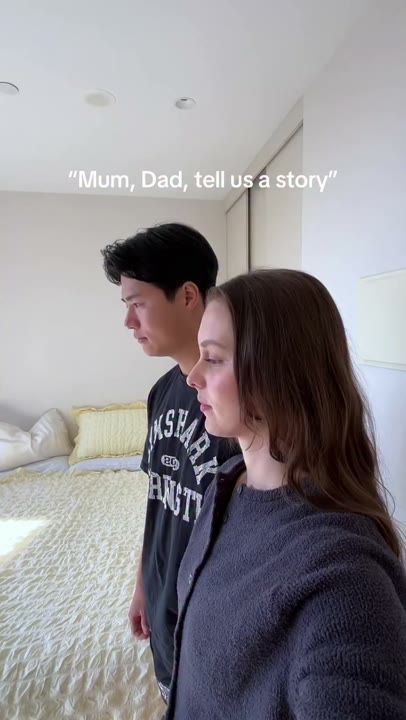
- The creator and a second performer stand beside a bed, lift their gaze off-camera, and begin turning toward each other beneath a storytime prompt.
- On-screen text
- “Mum, Dad, tell us a story”
- Spoken line
- None: no speech in the opening
- Sound
- The prior analysis reports upbeat electronic pop with vocal chops; no spoken dialogue is detected.
Script beats
Two performers look upward beneath “Mum, Dad, tell us a story”.
Establish a familiar family scenario and leave the requested story unresolved
The performers begin exchanging a glance, followed by a cut to a tall gift-wrapped object.
Turn the unanswered request into anticipation for a physical reveal
The wrapping opens to reveal a shelf of photobooks, with “Sure, which one?🥺” appearing.
Answer the prompt with a collection of memories rather than a single story
An open photobook shows travel photos across its pages.
Demonstrate the personal content behind the emotional promise
A shelf view highlights destination-themed books, including a Dubai cover.
Show the collection's display appeal and breadth
A hand flips through a photobook against a grid of destination covers.
Close with tangible product detail and travel-memory imagery
Why it works
- Unresolved request. The opening asks for a story without supplying one, giving viewers a reason to wait for the answer.
- Familiar family ritual. The storytime wording and upward gaze make the scene legible quickly, without spoken exposition.
- Product as emotional payoff. The photobooks turn the abstract idea of stories into physical memories that can be revisited and shared.
- Visible abundance. The stacked books make “which one?” a concrete payoff, while page turns demonstrate what the collection contains.
How to adapt it
- Opening request. For a recipe book: “Tell us about your favorite family meal”; for a photo-print service: “What was your first holiday like?”
- Memory-holding product. Reveal personalized photobooks, a travel journal, a recipe binder, or a keepsake box containing objects tied to the request.
- Reveal staging. Unwrap a collection, open a drawer of labeled keepsakes, or fan out several albums before choosing one.
- Proof shots. Show printed photo spreads, handwritten recipe pages, or journal entries that visibly answer the opening prompt.
- Keep intact.
- Put the short storytime request on screen immediately
- Leave a brief gap between the request and its answer
- Make the product reveal directly answer the opening request
- Follow the emotional reveal with readable covers and close-up content
Pattern template
“[Loved one], tell us about [shared experience]” → expectant pause → reveal [collection of memory products] → “Sure, which one?” → show the contents.
Keywords and tags
- Audience
- People who want to preserve travel memories in personalized photo books
- Angles
- Curiosity, Nostalgia, Relatability
- Call to action
- Use code LILYM10 at checkout for up to 60% off at PixoryOfficial.com; comment “BOOK” to receive the photobook link.
- Sound
- Music only
Video and caption by @pixorylily; original post on Instagram. Breakdown by UGC Growth Engineer, added .