A Life Engineeredtechnical-career YouTube channelStanford Onlineonline learning YouTube channelGitHubcoding platformGitHubCopilot coding assistant
Computer Science Self-Doubt Followed by a Resource Reveal
A text-overlay selfie hooks viewers with computer science self-doubt, then a wide-eyed reaction leads into a tablet tour of learning resources and coding software.
- Views
- 133K
- Likes
- n/a
- Comments
- n/a
- Length
- 10s
Observed : 132,774 views, not reported likes, not reported comments. Published . An Instagram view is a play of a video (Reels); images and carousels have no views.
First 3 seconds
- Visual
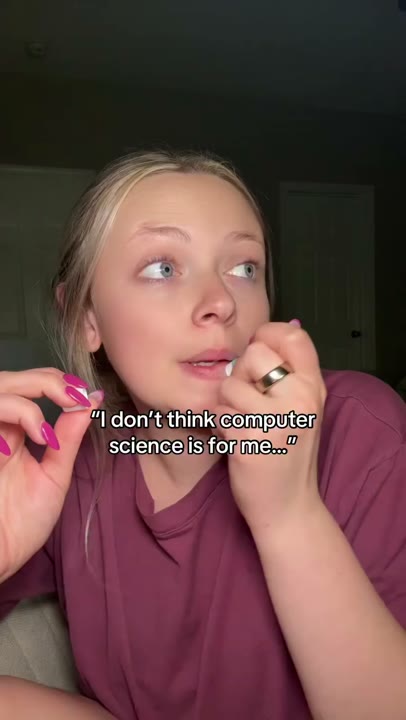
- The creator applies lip balm in a casual indoor selfie beneath a self-doubt quote, widens their eyes around 2.5 seconds, then cuts to a tablet showing A Life Engineered.
- On-screen text
- “I don't think computer science is for me...”
- Spoken line
- None: no speech in the opening
- Sound
- Upbeat pop music, according to the prior analysis; the transcript detects no speech.
Script beats
The creator applies lip balm beneath a quote doubting whether computer science is a good fit.
Make an intimidating subject feel personal and familiar through a casual everyday moment
The creator gives the camera an exaggerated wide-eyed look.
Signal a rebuttal and create anticipation for the next shot
A handheld tablet shot shows the A Life Engineered YouTube channel with its name overlaid.
Begin answering the self-doubt with a concrete technical-career resource
The tablet shows Stanford Online and its educational videos.
Add a recognizable learning resource to the recommendation sequence
The tablet shows GitHub, including a coding interface and Copilot messaging, beneath a reassuring resource overlay.
Finish with practical coding support and reinforce that help is available
Why it works
- self-recognition. The opening quote names a doubt that viewers struggling with computer science may already have.
- casual delivery. Applying lip balm makes the opening feel like an ordinary personal moment rather than a formal lesson.
- expressive transition. The wide-eyed look implies that the creator has an answer before the tablet reveal supplies it.
- concrete payoff. Named channels and a software platform turn reassurance into resources viewers can identify and explore.
How to adapt it
- The self-doubt quote. For a budgeting app: “I don't think budgeting is for me...” For a cooking subscription: “I don't think cooking is for me...”
- The everyday opening action. Apply lip balm, stir coffee, tie your hair back, or put on glasses while the quote stays visible.
- The resource reveal. Show a budgeting app's guided setup, a meal kit's recipe cards, or a learning platform's beginner lessons.
- The final reassurance. Pair the product screen with a specific reassurance such as “there are templates to help” or “start with the beginner lessons.”
- Keep intact.
- Put a recognizable self-doubt statement on screen immediately
- Keep the opening action simple enough that viewers can read the quote
- Use a clear facial reaction just before the cut
- Reveal relevant, identifiable help by roughly three seconds
Pattern template
“I don't think [activity] is for me...” → [casual action and wide-eyed reaction] → [product or resources that make starting easier].
Keywords and tags
- Audience
- People doubting whether computer science is for them and looking for learning or coding support.
- Angles
- Relatability, Validation, Curiosity
- Sound
- Music only
Video and caption by @paigenicole.creates; original post on Instagram. Breakdown by UGC Growth Engineer, added .