No product featured
An 'Angry Mom' Question Reframed as Everyday Overload
A kitchen-routine Reel hooks parents with an 'angry mom' question, then reframes that label through a growing list of everyday stressors.
- Views
- 2.4M
- Likes
- 87.9K
- Comments
- 788
- Length
- 10s
Observed : 2,431,131 views, 87,891 likes, 788 comments. Published . An Instagram view is a play of a video (Reels); images and carousels have no views.
First 3 seconds
- Visual
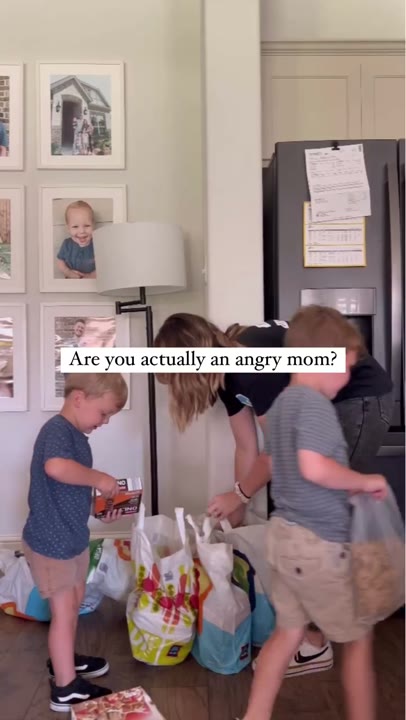
- The creator bends over grocery bags beside a refrigerator while children carry items across the shot, then stands holding a container.
- On-screen text
- “Are you actually an angry mom?”
- Spoken line
- None: no speech in the opening
- Sound
- Pop music with sung vocals, according to the prior audio analysis; no creator voiceover.
Script beats
The opening question overlays the creator unpacking groceries as children move through the kitchen.
Prompt immediate self-recognition and curiosity about a charged self-label
The overlay pivots to 'Or are you experiencing the domino effect of:' and begins listing lack of sleep and overstimulation as the kitchen view widens.
Offer an alternative explanation and create a reason to keep reading
The list adds carrying the mental load, unmet needs, and mom guilt over continuing household activity.
Build recognition through several specific sources of strain
Overwhelm and anxiety join the accumulating list as the footage shifts toward groceries on the counter and the pantry.
Make the cumulative burden visible while maintaining everyday movement
The completed list adds feeling out of control, being constantly touched, and constant loud noises.
Resolve the opening question with a validating reframe rather than a product pitch
Why it works
- direct self-question. The opening asks viewers to reconsider a negative label they may already use about themselves.
- self-recognition. Grocery bags, moving children, and simultaneous household tasks give the question a concrete, familiar setting.
- unresolved explanation. The 'Or' pivot promises another interpretation, encouraging viewers to stay for the list.
- cumulative validation. Each additional stressor offers another point of recognition, while the growing text stack illustrates the stated domino effect.
How to adapt it
- Opening self-label. For a meal-planning app: 'Are you actually bad at planning dinner?'; for a cleaning tool: 'Are you actually a messy person?'
- Routine shown behind the text. Film checking a nearly empty fridge for a grocery service, sorting clutter for storage products, or managing a crowded desk for a task app.
- Accumulating friction list. For a meal service, stack 'No plan,' 'Late meetings,' 'Missing ingredients,' and 'Another decision'; for storage products, use 'Limited space,' 'No designated spots,' and 'Daily pileups.'
- Product resolution. After the list, demonstrate a meal app generating a shopping list or a storage organizer giving frequently used items a clear place.
- Keep intact.
- Display one short, direct question immediately
- Show a routine that visibly supports the viewer's frustration
- Pivot from the negative self-label to contributing circumstances around 2.5–3 seconds
- Reveal specific stressors progressively rather than displaying the complete list at the start
Pattern template
Are you actually [negative self-label]? → Or are you experiencing [stacked everyday frictions]? → [optional product demonstration addressing one friction]
Keywords and tags
- Audience
- Parents who feel irritable or overwhelmed by everyday caregiving and household demands
- Angles
- Relatability, Curiosity, Empathy
- Sound
- Music only
Video and caption by @hannahkirkman_; original post on Instagram. Breakdown by UGC Growth Engineer, added .