DealSeekshopping promo-code serviceAmazononline shopping marketplaceEkouaerbutton-up pajama set
Candy-Eating Visual Interrupt Before an Amazon Savings Demo
A creator eats dangling rainbow candy in self-care attire while a discovery teaser builds curiosity, then demonstrates a promo-code discount on Amazon pajamas.
- Views
- 40.3K
- Likes
- 633
- Comments
- 3
- Length
- 29s
Observed : 40,285 views, 633 likes, 3 comments. Published . An Instagram view is a play of a video (Reels); images and carousels have no views.
First 3 seconds
- Visual
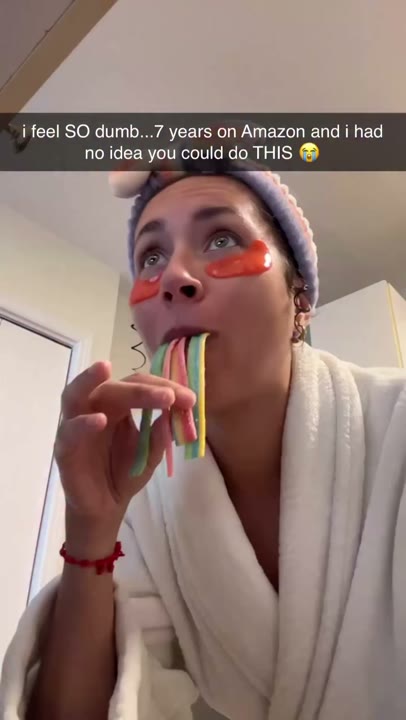
- The creator leans toward a low camera wearing a white robe, bow headband and red eye patches, with rainbow candy strips dangling from their mouth and exaggerated sideways glances.
- On-screen text
- “i feel SO dumb...7 years on Amazon and i had no idea you could do THIS 😭”
- Spoken line
- None: no speech in the opening
- Sound
- Unrelated background conversational dialogue, according to the prior audio analysis; no direct creator speech is established.
Script beats
Rainbow candy hangs from the creator's mouth as they widen their eyes; the overlay teases an unfamiliar Amazon trick.
Combine an unusual visual with an unresolved shopping discovery
The creator moves closer to the camera while continuing the candy-eating performance.
Sustain visual interest while viewers read the teaser
The video shifts to a phone showing an Amazon listing priced at $25.99.
Introduce the shopping example and establish the starting price
A DealSeek screen displays a copied promo code and a View on Amazon button.
Reveal the tool and actionable step behind the teaser
A finger interacts with the promo-code entry area at checkout.
Demonstrate how the discount is applied
Checkout shows the pajamas with a $13.00 discount and a final close-up of the $12.99 price.
Close the curiosity loop with a visible savings result
Why it works
- Visual incongruity. Dangling rainbow candy, glossy eye patches and exaggerated glances create an unusual opening before the shopping topic becomes clear.
- Unresolved discovery. The word THIS withholds the useful information, giving viewers a reason to stay for the demonstration.
- Self-deprecating recognition. The admission of feeling dumb makes missing a shopping feature feel familiar and invites viewers to check whether they missed it too.
- Visible payoff. The initial price, copied code and checkout reduction turn the vague teaser into a concrete example.
How to adapt it
- Opening visual. Use a comically large mug, mismatched slippers or an exaggerated frozen reaction while performing an ordinary home routine.
- Discovery teaser. Try 'I've used this app for years and only just found THIS' for a budgeting feature, or 'I've owned this vacuum for months and missed THIS' for an overlooked attachment.
- Demonstrated payoff. Show a real checkout reduction, a saved app setting or an attachment completing a specific cleaning task.
- Product and setting. Swap pajamas and a bathroom routine for kitchen equipment during breakfast or a travel app while packing.
- Keep intact.
- Start the unusual visual immediately
- Keep the discovery teaser readable within the first three seconds
- Withhold one specific useful detail, then demonstrate it clearly
- Finish with visible evidence that resolves the opening promise
Pattern template
[Unexpected everyday visual] + 'I've used [product/platform] for [time] and had no idea you could do THIS' → [show steps] → [visible result]
Keywords and tags
- Audience
- Amazon shoppers looking for promo codes and ways to save on everyday purchases
- Angles
- Curiosity, Humor, Fomo
- Sound
- Voice only
Video and caption by @dailydealsbylo; original post on Instagram. Breakdown by UGC Growth Engineer, added .