No product featured
Late-Night Texting Denial Followed by a Sleep Reveal
A late-night texting skit hooks viewers with a familiar denial of sleepiness, then pays it off with a five-minute time jump showing the creator asleep.
- Views
- 1.9M
- Likes
- 55.4K
- Comments
- 216
- Length
- 15s
Observed : 1,934,841 views, 55,369 likes, 216 comments. Published . An Instagram view is a play of a video (Reels); images and carousels have no views.
First 3 seconds
- Visual
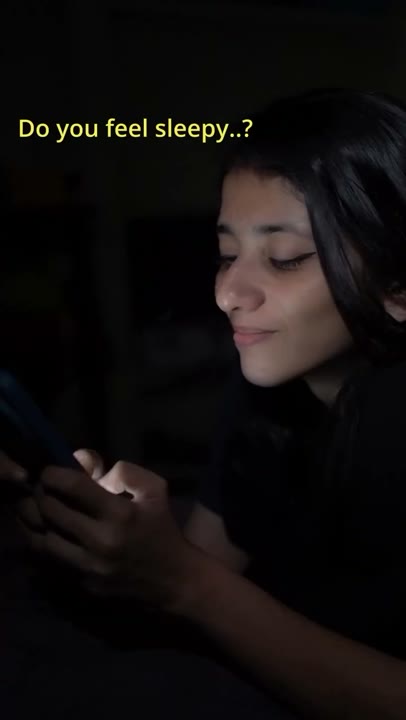
- The creator holds a phone with both hands in a dark room, looks down at its glowing screen, and smiles slightly as simulated chat messages appear.
- On-screen text
- “Do you feel sleepy..? / Nop . .😊💕”
- Spoken line
- None: no speech in the opening
- Sound
- Soft instrumental background music without spoken dialogue, according to the prior audio analysis; the transcript detects no speech.
Script beats
A close side-profile shot establishes late-night phone use; yellow text asks, 'Do you feel sleepy..?'
Trigger recognition of a familiar late-night texting situation
A white reply, 'Nop . .😊💕', appears while the creator continues looking at the phone.
Establish the denial that the ending will overturn
The chat asks, 'Are you sure??😊', and the creator replies, 'Yes 😎'.
Strengthen the confident claim and invite viewers to anticipate its failure
The other texter says they will return in five minutes; the creator replies, 'Ok ... 💖💖' and 'Take your time😘😘'.
Set a short waiting period and make the impending time jump easy to follow
A '5 mins later..😂' overlay introduces the creator asleep beside a lit phone while unanswered messages build toward a good-night sign-off.
Deliver the visual contradiction and affectionate comedy payoff
Why it works
- self-recognition. The dark room, glowing phone, and denial of sleepiness resemble an everyday late-night messaging habit.
- unresolved outcome. The denial and follow-up question make viewers anticipate whether the creator can actually stay awake.
- setup and reversal. Confident replies establish an expectation that the sleeping reveal overturns without needing spoken explanation.
- readable conversation. Yellow prompts and white replies distinguish the two sides of the exchange within a single-person performance.
How to adapt it
- The denied need. For a moisturizer, use 'Is your skin feeling dry?' followed by 'Nope'; for a charging accessory, use 'Will your battery last?' followed by 'Definitely'.
- The delayed reveal. Show the creator reaching for moisturizer after a short time jump, or reveal a nearly empty battery before plugging in the featured charger.
- The product's role. For bedding or a sleep mask, retain the asleep reveal and clearly show the featured item in use; present it as part of the scene without claiming it caused sleep.
- Setting and chat wording. Move the exchange to a desk for a productivity app, a bathroom for skincare, or a packing scene for travel accessories; keep the question, confident reply, and visible reversal.
- Keep intact.
- Establish a recognizable situation and the creator's denial within the first three seconds
- Make the two sides of the text conversation visually distinguishable
- Set up a brief wait before the time jump
- End with a visible outcome that contradicts the earlier reply
Pattern template
[Familiar setting] → 'Are you [state/need]?' → '[confident denial]' → '[short interval] later' → [visual contradiction and chat reaction]
Keywords and tags
- Audience
- People who recognize denying sleepiness during late-night chats and then falling asleep while waiting.
- Angles
- Relatability, Humor, Curiosity
- Sound
- Music only
Video and caption by @thaz_liii; original post on Instagram. Breakdown by UGC Growth Engineer, added .