No product featured
Left on Read: Casual Reaction Versus Dramatic Reality
A bedroom texting skit hooks viewers with a relatable 'left on read' overlay, then contrasts a casual response with an exaggerated emotional collapse.
- Views
- 2M
- Likes
- 206K
- Comments
- 1.4K
- Length
- 21s
Observed : 1,984,805 views, 206,207 likes, 1,409 comments. Published . An Instagram view is a play of a video (Reels); images and carousels have no views.
First 3 seconds
- Visual
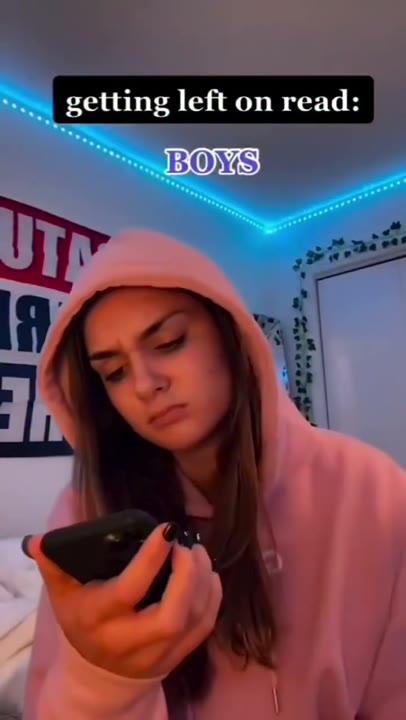
- The creator in a pink hoodie frowns at a smartphone, lowers it, and begins looking off-camera in a static bedroom close-up.
- On-screen text
- “getting left on read: BOYS”
- Spoken line
- “She left me on red”
- Sound
- Spoken dialogue; the prior audio analysis reports a pivot to shouting 'Mom, when's dinner?' around 2–3 seconds. Background audio is unspecified.
Script beats
Under 'getting left on read: BOYS', the creator studies a phone with a furrowed brow.
Establish a familiar texting disappointment viewers can immediately recognize
The creator lowers the phone and looks off-camera; the prior analysis reports the mundane question 'Mom, when's dinner?'
Release the initial tension with a casual change of subject
The video switches to the creator in a green hoodie holding a phone beneath 'Boys actually getting left on read'.
Introduce the contrasting reality and set up a second reaction
The creator reacts to the phone, then lowers it with a visibly strained expression.
Build the emotional counterpoint to the opening's casual response
The scene changes to a wide bedroom view with the creator lying face-down across the bed.
Turn texting disappointment into an exaggerated visual punchline
The creator remains sprawled on the bed, with raised legs visible around 18.8 seconds, before ending face-down.
Extend the physical comedy and make the contrast unmistakable
Why it works
- self-recognition. The opening overlay names a common messaging frustration before viewers need to interpret the performance.
- comic deflection. The reported dinner question redirects apparent disappointment toward an everyday concern.
- expectation versus reality. The later 'actually' overlay reframes the opening as a casual portrayal and promises a more dramatic counterpart.
- physical exaggeration. The face-down collapse makes the emotional payoff readable even without dialogue.
How to adapt it
- Relatable trigger. Use running out of coffee, a phone battery dying, or discovering an empty skincare bottle.
- Contrasting labels. Try 'Me when my coffee runs out' followed by 'Me actually when my coffee runs out', or 'Me pretending my battery is fine' followed by 'Me at 1%'.
- Casual spoken pivot. After checking an empty coffee bag, say 'Water is fine'; after seeing a low battery, say 'I barely use my phone anyway'.
- Product resolution. After the dramatic reaction, show making coffee from a backup bag or connecting a portable charger, keeping the product reveal brief.
- Keep intact.
- Name a recognizable frustration in a readable overlay immediately
- Show the creator checking the object that triggers the reaction
- Keep the opening response restrained enough for the later reaction to contrast clearly
- Use an explicit second label to signal the reality reveal
Pattern template
[Relatable frustration]: [casual reaction] → '[Audience] actually [experiencing frustration]' → [exaggerated physical reaction] → [optional product resolution]
Keywords and tags
- Audience
- People who recognize the frustration of being left on read and enjoy exaggerated texting humor.
- Angles
- Relatability, Humor, Surprise
- Sound
- Voice only
Video and caption by @da.himes; original post on Instagram. Breakdown by UGC Growth Engineer, added .