No product featured
Email Punctuation Overthinking as a Relatable Desk Skit
A desk skit hooks viewers with “Email punctuation be like,” then pairs tiny punctuation changes with exaggerated vocal tones to dramatize a familiar workplace dilemma.
- Views
- 12.3M
- Likes
- 820K
- Comments
- 1.1K
- Length
- 19s
Observed : 12,301,085 views, 820,314 likes, 1,073 comments. Published . An Instagram view is a play of a video (Reels); images and carousels have no views.
First 3 seconds
- Visual
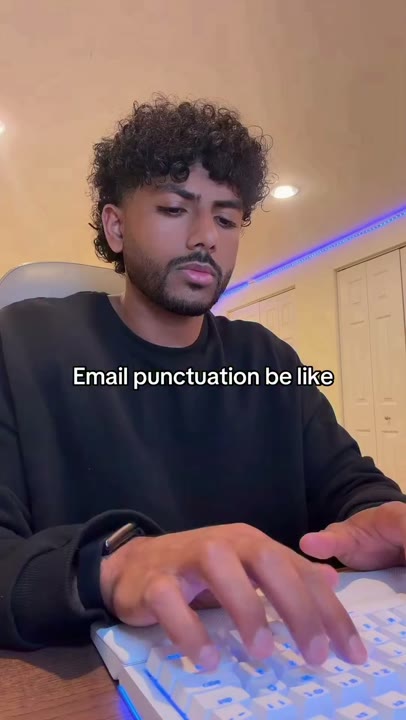
- The creator types at a desk with a focused expression; by 3 seconds, the view cuts to an email ending with “I'll see you tomorrow!”
- On-screen text
- “Email punctuation be like”
- Spoken line
- None: no speech in the opening
- Sound
- The prior analysis reports keyboard clicks followed around 2.1 seconds by a high-pitched sung or exaggerated vocal rendition; the supplied images cannot verify the sound.
Script beats
The creator types beneath the persistent email-punctuation overlay.
establish an instantly recognizable situation before explaining the joke
An email close-up shows “I'll see you tomorrow!”; secondary evidence describes an exaggerated eager vocal interpretation.
turn a small punctuation choice into an outsized emotional signal
The creator reacts with a strained expression and resumes typing; the prior analysis describes replacing the exclamation mark.
show discomfort with the first option and motivate another attempt
Screen close-ups show “I'll see you tomorrow.” while the transcript supplies an aggressive dramatic interpretation.
escalate the joke by making the supposedly neutral alternative sound hostile
The creator returns on screen, visibly perplexed and gesturing over the keyboard.
close on the recognizable frustration of overthinking a simple email
Why it works
- Self-recognition. The overlay names a familiar email-writing dilemma while the typing makes the situation legible immediately.
- Disproportionate contrast. A tiny visible change from an exclamation mark to a period carries an exaggerated emotional difference in the reported audio.
- Repeated failed solution. Trying a more neutral alternative creates a second joke and gives viewers a reason to watch beyond the initial example.
How to adapt it
- Everyday decision. Use “Client follow-ups be like” for a writing assistant or “Naming project tasks be like” for a productivity app.
- Visible alternatives. Show two versions of the same message, such as “Checking in!” and “Checking in.”, followed by an actual tone-adjustment feature.
- Brand resolution. After two awkward attempts, demonstrate a writing tool suggesting a clear, friendly sentence and show the creator's relieved reaction.
- Vocal interpretation. Record original eager and overly stern readings of the same sentence, synchronized with each on-screen version.
- Keep intact.
- Name a recognizable micro-dilemma in the opening overlay
- Start with the creator already performing the relevant action
- Keep the wording nearly identical so the tiny change drives the joke
- Make screen text readable and pair each version with a distinct emotional interpretation
Pattern template
[Everyday task] be like → [tiny choice A + exaggerated interpretation] → [reaction] → [choice B + opposite interpretation] → [frustrated reaction or product solution]
Keywords and tags
- Audience
- People who overthink how punctuation makes their work emails sound
- Angles
- Relatability, Humor, Surprise
- Sound
- Unknown
Video and caption by @lifewfarzy; original post on Instagram. Breakdown by UGC Engineer, added .