No product featured
A Hair-Styling Favor Opens a Service-for-Service Skit
A text-led hair-styling skit drops viewers into a favor request, then uses a service-for-service bargain to build curiosity before a visual punchline.
- Views
- 23.1M
- Likes
- 1.9M
- Comments
- 3K
- Length
- 15s
Observed : 23,131,090 views, 1,896,842 likes, 3,030 comments. Published . An Instagram view is a play of a video (Reels); images and carousels have no views.
First 3 seconds
- Visual
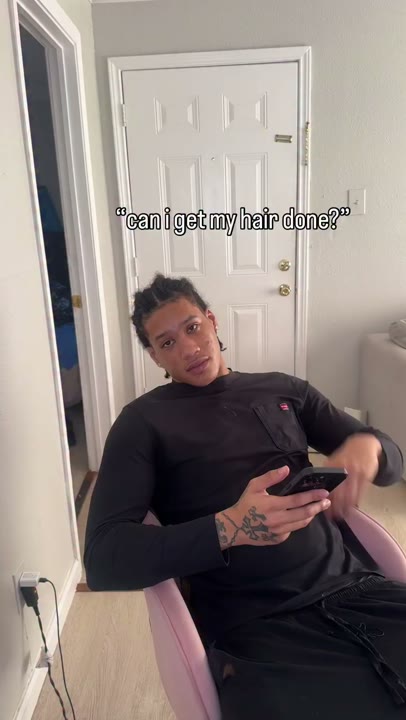
- The creator reclines in a pink chair holding a phone, looks toward the camera and touches near the hair; by 3 seconds, the shot switches to the other participant's response.
- On-screen text
- “can i get my hair done?” / “what’s in it for me?” / “service for service?”
- Spoken line
- None: no speech in the opening
- Sound
- Background instrumental music with dialogue conveyed through overlays, according to the prior analysis; the transcript detects no speech.
Script beats
The seated creator requests hair styling through the overlay “can i get my hair done?”
drop viewers into an exchange with an unanswered request
A reverse shot presents the response “what’s in it for me?”
introduce a condition that turns a simple favor into a negotiation
The seated creator gestures beneath “service for service?”
set up a reciprocal exchange and make viewers anticipate both results
The sequence moves to an overhead view of finished, neatly braided hair, clearly visible at 8.48 seconds.
deliver the first result and establish an expectation for the return favor
The seated creator looks up after showing the braids.
bridge from the styling reveal to the other participant's reaction
The other participant appears with a visibly added dark beard-like effect and gives a sideways, unimpressed look.
pay off the exchange with an unexpected appearance and deadpan reaction
Why it works
- Immediate story context. The chair, hair gesture and short request establish the situation without introductory exposition.
- Unresolved bargain. The conditional response raises a concrete question: what will the creator offer in return?
- Escalating visual payoff. The polished braid reveal sets up an expectation that the final beard-like effect and unimpressed expression undercut.
- Readable silent dialogue. Short quoted overlays and alternating shots make the negotiation understandable without spoken dialogue.
How to adapt it
- Requested favor. For haircare, ask “can you style my hair?”; for makeup, ask “can you do my liner?”; for food, ask “can you make my coffee?”
- Return favor. Trade styling for a product photo, makeup help for cleaning brushes, or coffee preparation for washing the mugs.
- Product demonstration. Insert a brief shot of styling cream during braiding, a liner pen during application, or a milk frother during coffee preparation.
- Final mismatch. Reveal perfect styling followed by an overly dramatic product photo, or a polished coffee followed by an exaggerated mug-cleaning performance.
- Keep intact.
- Open directly on a specific favor request
- Introduce the other participant's condition within roughly three seconds
- Keep dialogue overlays short and immediately readable
- Use alternating perspectives to make the exchange clear weather or not audio is available
Pattern template
“can you [favor]?” → “what’s in it for me?” → “[exchange]?” → [successful first result] → [unexpected return favor and deadpan reaction]
Keywords and tags
- Audience
- Viewers who enjoy hair-styling humor and skits about exchanging favors.
- Angles
- Curiosity, Humor, Surprise
- Sound
- Music only
Video and caption by @stylessby.mo; original post on Instagram. Breakdown by UGC Engineer, added .